For years everyone counted grams of protein; now a new word is spinning around social media — fibermaxxing. Tasting Table names fibermaxxing one of the hottest trends of 2026, with fiber challenging protein as the nutrient fitness influencers focus on [1]. The fun part: a Georgian grandmother who puts lobio, pkhali and a plate of fresh herbs on the table has been doing this for ages — it just didn't have a name. Let's take the trend apart without the hype and see where fiber actually sits in the food we eat every day.
What fibermaxxing is and where the trend came from
The name comes from internet slang: "maxxing" means pushing something to the maximum. Here it is about dietary fiber — the part of plant food we find in beans, vegetables, greens, fruit and whole grains. According to Tasting Table, people like the trend because, in their words, it keeps them full longer and helps digestion [1].
An important detail: this is how followers of the trend describe their experience, not a prescription. Still, there is one thing we genuinely like about it. Unlike many trends, fibermaxxing doesn't ask you to buy expensive exotic products. It is enough to put more plant food on your plate — and for Georgian cooking, that is hardly news.
What science says about fiber, satiety and the gut microbiota
Feeling full is the main reason people pick up the trend [1]. But the more interesting story is about the microbes that live in our gut.
A recently published narrative review (a preprint, meaning it has not yet been peer-reviewed) pulls together experimental studies, observational cohorts, randomized controlled trials and meta-analyses on dietary fiber, polyphenols and the gut microbiota [2]. The authors describe how fermentable fiber and polyphenols change the composition and metabolism of gut microbes [2]. The microbes, in turn, produce active compounds, including short-chain fatty acids, which are involved in regulating the intestinal barrier and immune balance [2].
The review focuses on healthy aging: the authors note that age-related changes in the gut microbiota contribute to chronic low-grade inflammation and metabolic dysfunction [2]. This is a direction of research, not a magic pill: fiber is not a medicine, it is simply part of a normal, varied diet. Notice one more detail — alongside fiber, the review also talks about polyphenols, compounds found in plants [2]. In other words, it makes sense to think about the whole plate rather than one "superfood".
A fiber-rich Georgian plate: lobio, pkhali, ghomi, seasonal fruit
When we asked GULIANI's owner which Georgian dish says "fiber" the loudest, the answer came in a second: "Pkhali is number one." The advice was just as short: "Beans, any kind of pkhali, spinach on its own."
- Lobio — beans stewed in a clay pot are the foundation of the Georgian plant-based table. Made from a typical home recipe, it is about 170 kcal per 100 g and ~425 kcal per 250 g serving (lobio calories).
- Pkhali — spinach, beetroot, leek or cabbage, with walnuts and spices. The walnut dressing makes it rich: spinach pkhali is ~219 kcal per 100 g, beetroot pkhali ~146 kcal.
- Spinach on its own — boiled, with garlic or a little walnut. A quick side for days when there's no time to make pkhali.
- Ghomi — ~82 kcal per 100 g (ghomi calories). A soft base that turns into a complete plate next to lobio and pkhali.
- Seasonal fruit — plums, peaches and figs in summer; apples, pears, quinces, persimmons and feijoa in autumn. At an Imereti market every month has its own fruit, and that alone is variety.
You can build your plate and count calories in the calorie calculator, which includes Georgian dishes. Find more dishes in the Healthy Table section.
Nut butter + fiber: apple, oatmeal, whole-grain bread
Let's be honest here. In the owner's words: "In traditional dishes we almost never add nut butter. Mostly it goes with lavash." So please don't stir peanut butter into your lobio — its place is breakfast and snacks, where it pairs nicely with fiber-rich foods.
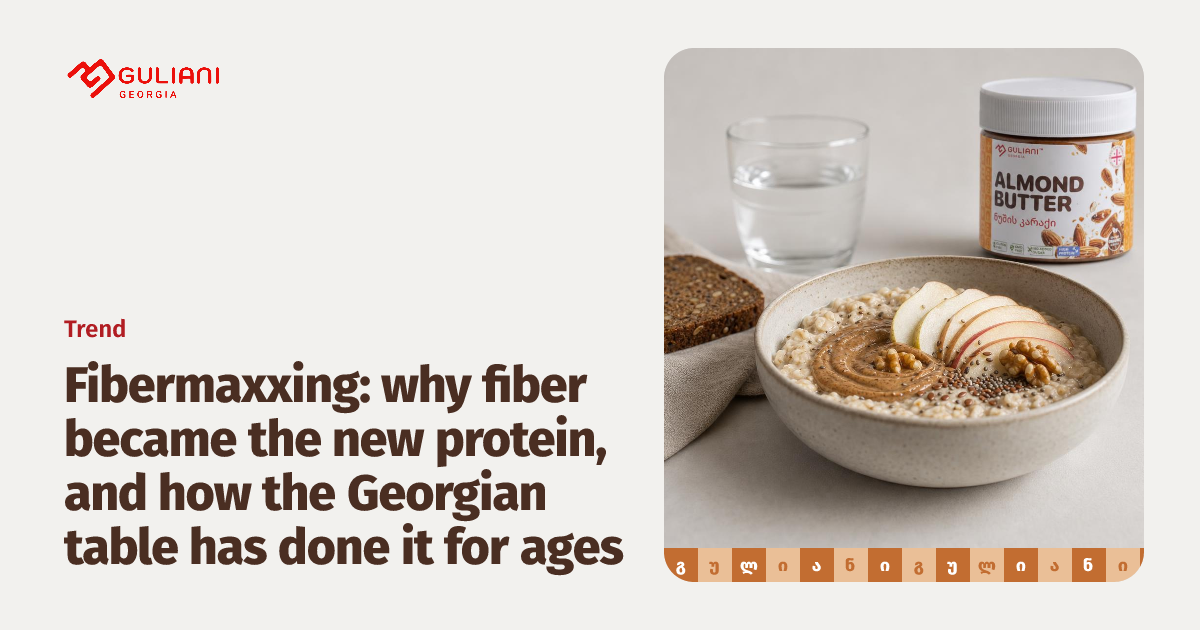
The owner's favourite combination: "I love it with chia and lazy oats in milk, left overnight. In the morning I add a spoon of nut butter and just enjoy it."
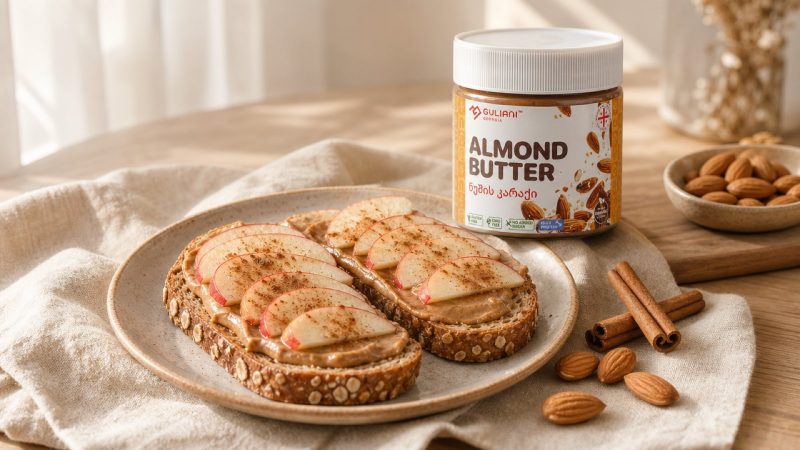
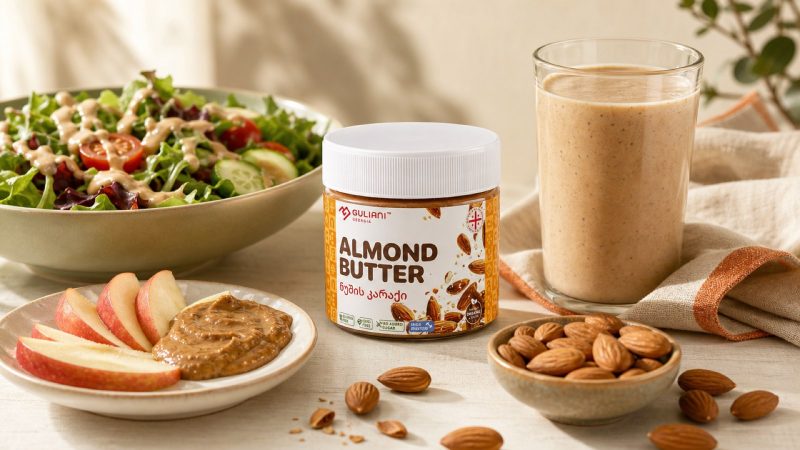
- Lazy oats with chia — oats, chia and milk in a jar, into the fridge in the evening. In the morning, a spoon of almond butter on top and, if you like, a chopped apple.
- Apple and nut butter — apple slices with a thin layer of Peanut Butter Classic. A perfect snack for school or work.
- Lavash or whole-grain bread — a thin layer of nut butter, slices of banana or pear on top. Roll it up and take it with you.
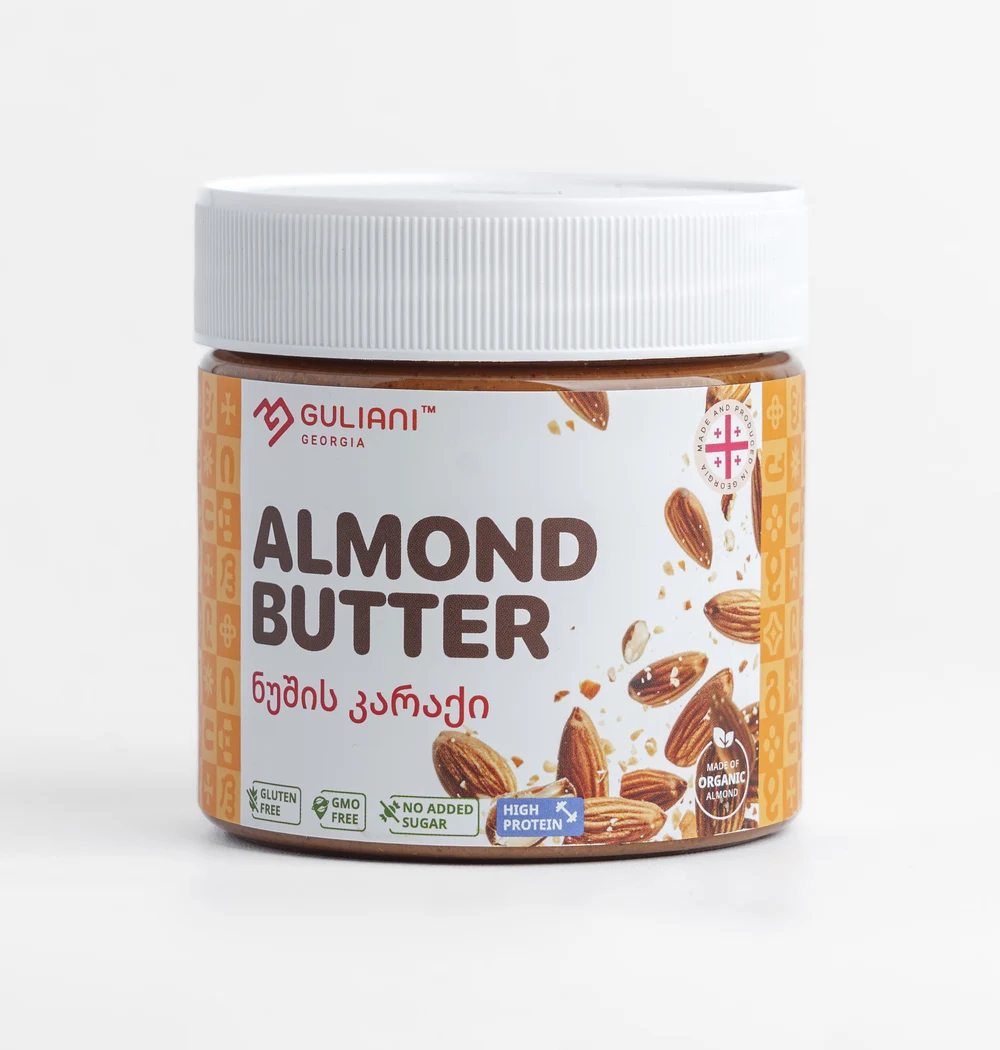
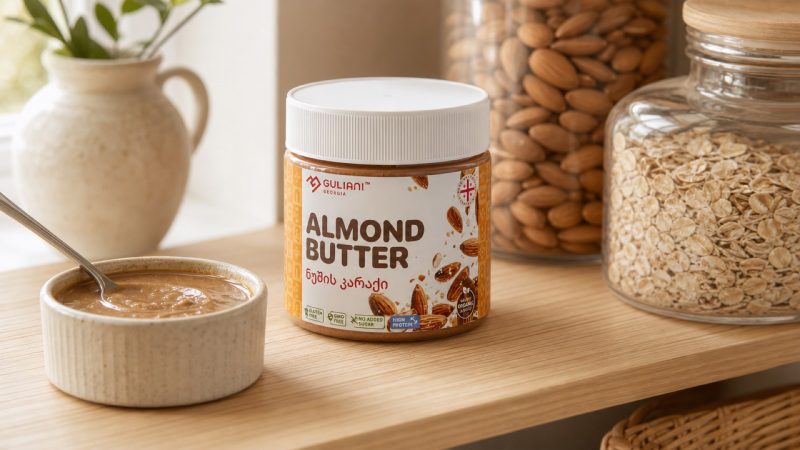
Nut butter also adds protein to these combinations: a 36 g portion of Classic has 232 kcal and 9.6 g protein, almond butter has 236 kcal and 7.6 g protein. So you don't really have to choose between "protein or fiber". To count your exact portion, use the nut butter nutrition calculator.
How not to overdo it: water, small steps and variety
- Step by step. Don't change everything at once: one extra lobio night a week, lazy oats on a few mornings. A habit added gradually tends to stick.
- Water. A jug of water on the table should feel as natural as bread. Drinking water through the day is simply a good habit.
- Variety. Different beans, different pkhali, fruit by the season. The review talks about polyphenols as well as fiber [2], so a colourful plate makes more sense than obsessing over one product.
- It's not a competition. Fibermaxxing doesn't mean counting grams obsessively. For health questions, ask a doctor, not social media.
Tonight, mix oats, chia and milk in a jar; tomorrow morning, add a spoon of almond butter or Peanut Butter Classic. For lunch — lobio and pkhali, just like at grandma's. More ideas are waiting in our recipes. A 350 g jar of Classic costs 15 GEL, almond butter 25 GEL, and from 2 jars you get 20% off the whole order.