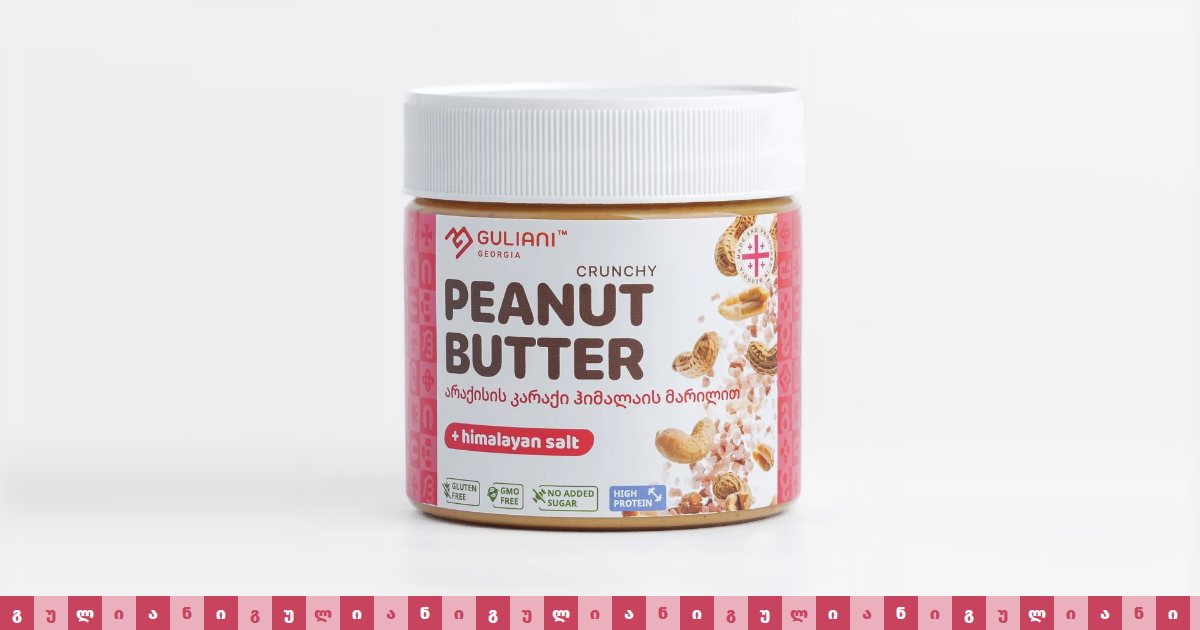
The word “ultra-processed” sounds a bit scary these days. A neighbour tells you she avoids anything that comes in a jar; a friend insists that whatever went through a machine is already “chemicals”. Peanut butter often ends up on that list: it's in a jar, it's ground, so it must be ultra-processed, right? Let's sort out what the NOVA classification actually looks at, and learn to read a label in 30 seconds, whether you're at the bazaar, the supermarket or the corner shop.
What NOVA is and why people argue about it
NOVA doesn't group foods by calories or protein, but by processing. The key point is that it considers both the degree and the purpose of processing, trying to capture how recent changes in the food system may link with health [1]. At the same time, its value for understanding the relationship between diet and disease is debated [1].
Reviews tend to focus either only on its strengths or only on its limitations, and when they discuss just the degree of processing and forget the purpose, the result is confusion that stalls progress in public health [1]. Peanut butter falls right into that trap: it isn't the blender or the mill that makes a food ultra-processed.
Look at a Georgian kitchen: grinding walnuts for satsivi or pkhali is processing too, yet nobody calls bazhe sauce ultra-processed. What matters is what goes in, and why.
Nuts + salt vs nuts + sugar + palm oil: where each one lands
Picture two jars side by side. The first one lists: roasted peanuts, salt. The second: peanuts, sugar, palm oil, emulsifier, flavouring.
- In the first jar, processing has one goal: to turn peanuts into something you can spread. Nothing is added that you wouldn't find in your own kitchen.
- In the second jar, ingredients are added for other purposes: a sweeter taste, a texture that never separates, a “pretty” look on the shelf.
Because NOVA looks at purpose as well as degree [1], these two jars are not the same story, even though both went through a grinder. The first is essentially ground peanuts. The second is a formulated product in which the peanut is just one component among several.
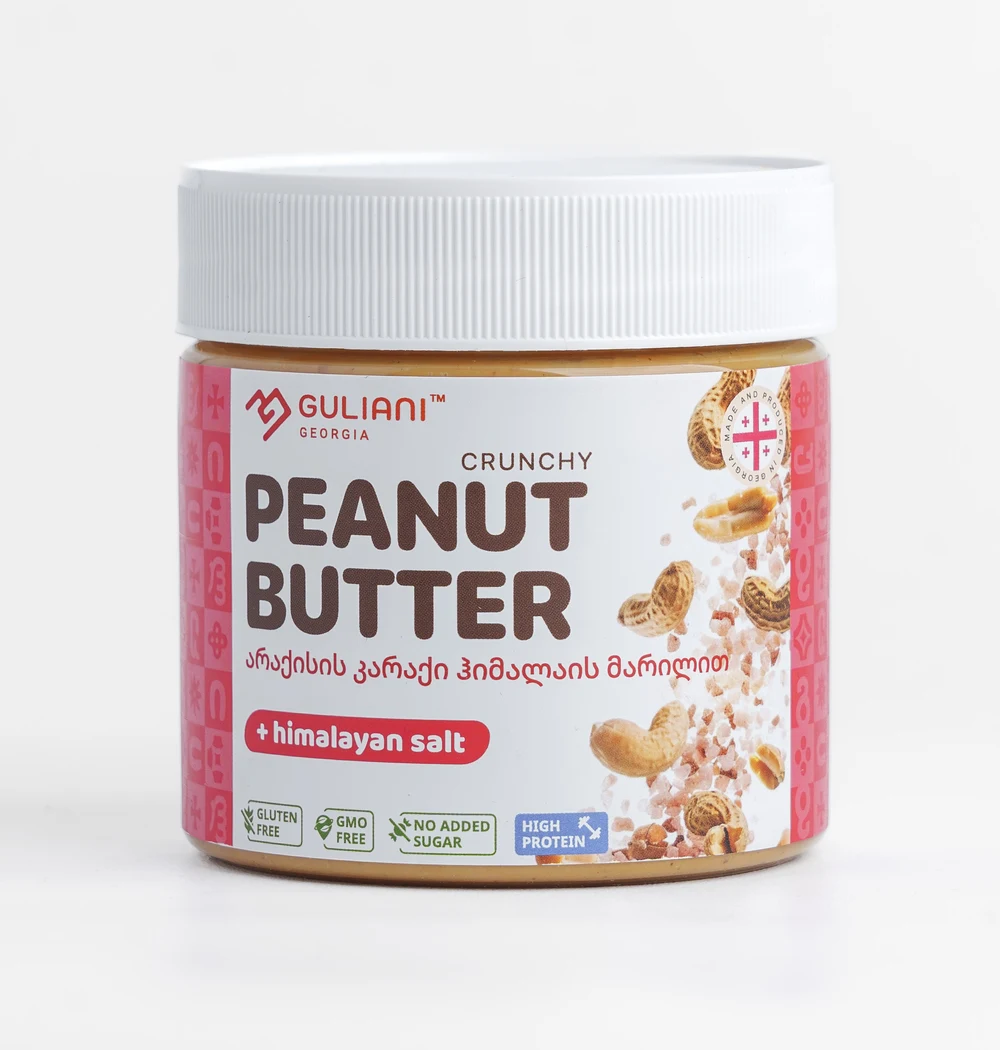
“We're against any additives that are there just for ‘looks’,” say the people at GULIANI. The questions customers ask most often are about sugar and palm oil, and those are exactly the right questions.
What stays in the nut after roasting and grinding
Nuts, both tree nuts and peanuts, are nutrient-dense foods: they contain unsaturated fatty acids, fibre, minerals and vitamins, as well as polyphenols and phytosterols [2]. Eating nuts has been associated with contributions to weight management and healthy ageing [2]. Note the word “associated”: this is about your overall diet, not a magic spoon.
When a jar holds only nuts and salt, you're eating the nut itself, just in a different form, with no sugar or other fats diluting it.
How is it done in Tskaltubo? “We roast slightly above medium, up to the moment the aroma opens up fully but before it tips into bitterness,” the producer explains. Roasting time depends on the nut: peanuts take about 2 hours to roast evenly and develop flavour, almonds about an hour. The grind depends on the taste they're after, but it's mostly fine, down to microns.
One more thing: natural nut butter can separate. “It doesn't affect the taste. If the oil is on top, just stir it and the taste will be the same.” Stabilisers are added precisely to stop that from happening, which makes them a good example of processing for appearance rather than for the food itself.
Label check: 4 signs you're holding an ultra-processed product
- Palm oil or other added fats: “vegetable fat”, hydrogenated oils. Nuts have their own oil and don't need another one.
- Sugar in any form: sugar, glucose syrup, dextrose, especially near the top of the list.
- Stabilisers and emulsifiers: E-numbers, “mono- and diglycerides”, added so the butter never separates.
- A long list of words you don't have in your kitchen: flavourings, preservatives, milk powder and the like.
The 30-second rule: read the ingredients on the back of the jar, not the big claims on the front. If the first and almost only ingredient is nuts, maybe with salt, you're fine. If the list is longer than your shopping list for lobio, take a closer look.
How to read GULIANI jars and others on the shelf
The same test works on our own jars. Here's what each one says:
- Peanut Butter Classic: roasted peanuts, Himalayan salt. 232 kcal and 9.6 g protein per 36 g portion.
- Almond Butter: roasted organic almonds, Himalayan salt.
- Peanut Butter with Honey: roasted peanuts, honey, Himalayan salt. Honey is a sweetener too, and we say so openly, but there's no syrup, no palm oil and no stabilisers.
- Peanut Butter with Coconut: roasted peanuts, coconut flakes, honey, Himalayan salt.
- Cashew Butter with Coconut: roasted cashews, coconut flakes. Just two ingredients.
Check any other brand the same way: flip the jar, read, count the ingredients and run through the four signs. To work out the calories and protein in your portion, use the nut butter nutrition calculator.
So peanut butter isn't ultra-processed by default: it all comes down to what's in the jar. Start simple: a jar of Classic costs 15 GEL, and from 2 jars you get 20% off the whole order. For ideas on what to make, head to our recipes, from breakfast to dessert.