You spread it thick on warm bread, take a bite, and suddenly the table goes quiet: your tongue is wrestling the roof of your mouth, you can’t get a word out, and your hand drifts toward the tea glass. Familiar? The question of why peanut butter sticks to the palate shows up in searches regularly [1]. The short answer: it’s not a defect. Let’s look at what actually happens in your mouth and how to make the feeling lighter without giving up the jar.
“Sticky”: what exactly are we feeling?
The sensation is a mix of several things. The mass is thick, it coats the tongue and palate in a thin layer, and it doesn’t “let go” right away. Your mouth feels a little dry and you want a sip of water or tea. It’s close to what you feel with a spoon of crystallised honey or a dense piece of halva: the texture doesn’t melt instantly, it needs a moment.
English even has a joke word for it: arachibutyrophobia, “the fear of peanut butter sticking to the roof of your mouth”. Don’t take it as a real diagnosis. It’s wordplay that captures exactly that familiar moment.
The GULIANI team hears this question often, and their answer comes from experience: “Usually it’s people who have never tried peanut butter before who notice it. But over time they get used to it.”
Dense texture and no water: why natural butter sticks
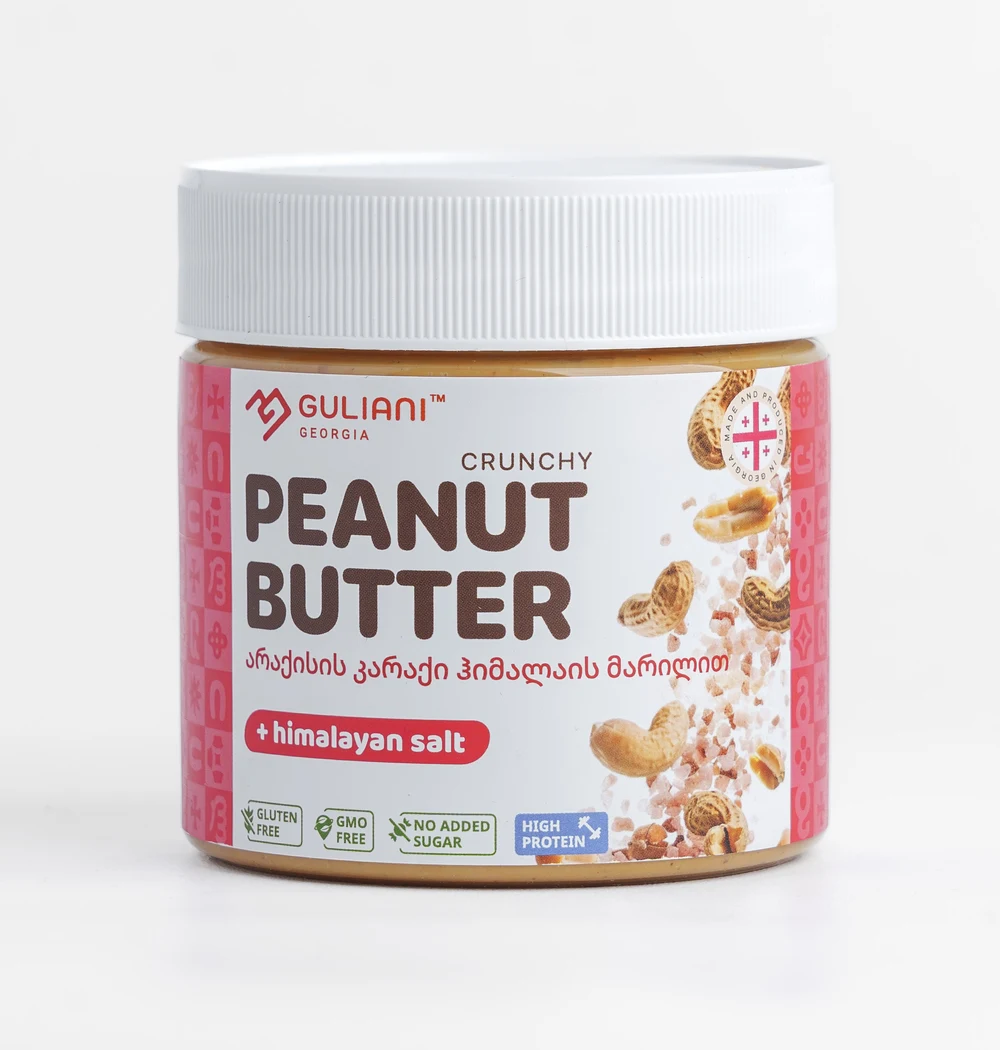
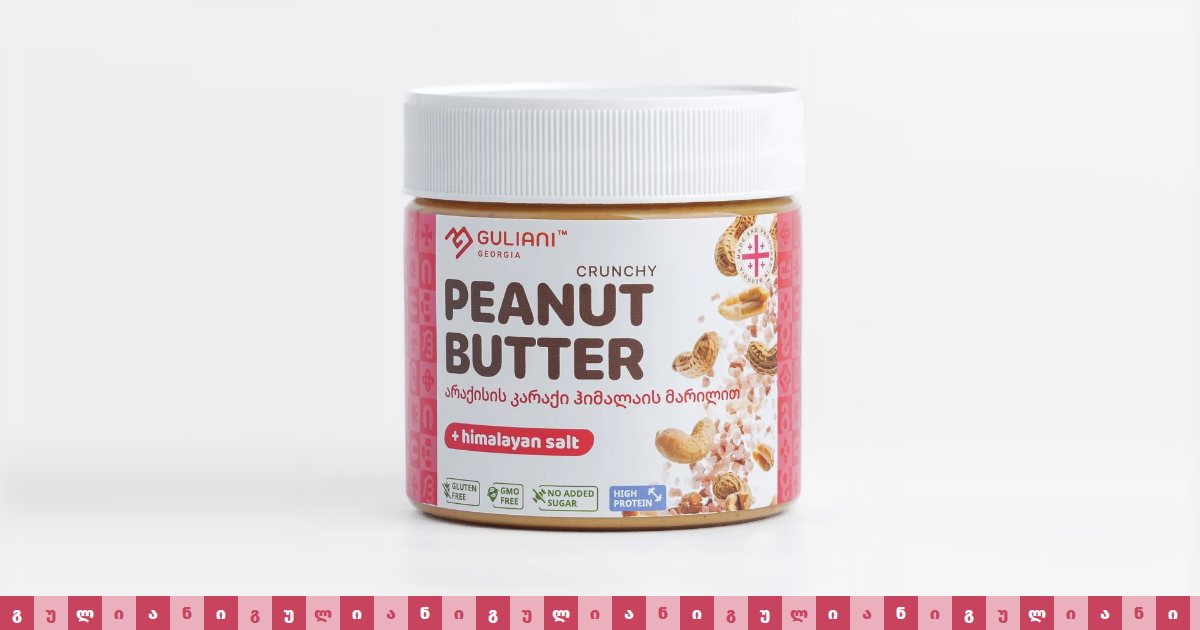
Look at the label of Peanut Butter Classic: roasted peanuts and Himalayan salt. That’s it. No water, no added oil, no thickeners. What’s in the jar is simply ground peanuts, essentially a concentrated nut: a 36 g portion contains 232 kcal and 9.6 g of protein. Concentrated food comes with a concentrated texture, so the butter turns out dense and thick.
In production, two things decide how viscous the butter ends up:
- Roasting. In the words of GULIANI’s owner, roasting directly affects viscosity. That makes the roast as important as the peanuts themselves.
- Fineness of the grind. It depends on the flavour: “On Classic we grind as finely as possible, but we add little pieces so it has a pleasant crunch.”
One more important detail: no water is used in production at all. The consistency depends entirely on the peanuts and on how they are roasted and ground. Naturally, a mass like that is thick and a little “gluey”.
Natural butter vs. butter with palm oil and sugar: how they feel
Many of us first met peanut butter as a sweet spread on a supermarket shelf. If the label lists palm oil, sugar or other additions, the texture will be different, because the manufacturer shaped it on purpose. Natural butter gets its shape from nothing but the nuts.
- Natural butter: thicker and denser. Oil may rise to the top, and it tastes of roasted peanuts and salt.
- Butter with additions: uniform and “fluffy”, often doesn’t separate, and sweetness comes first.
GULIANI doesn’t use palm oil in any of its butters. So that stickiness is honest: it comes straight from the peanuts, not from technological tricks.
How to make it “lighter”: apple, matsoni, banana and a quick sauce
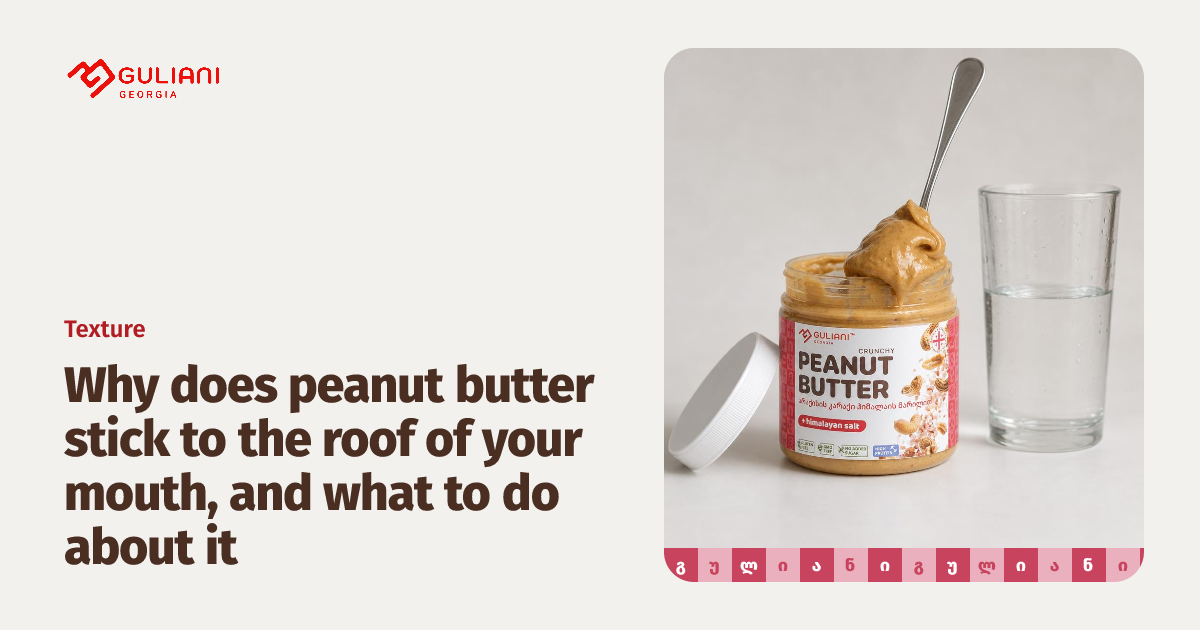
The main trick is simple: don’t eat it straight off a spoon or on dry bread. Give it a partner with some moisture. The GULIANI team themselves most often pair it with jam or banana.
- Apple. Dip juicy apple slices into the butter. The tartness and crunch balance the density nicely, and it travels well in a school bag.
- Matsoni. Stir a spoon of butter into a glass of matsoni and drizzle with a little honey, or go straight for Peanut Butter with Honey. You get a quick breakfast or a dip for fruit.
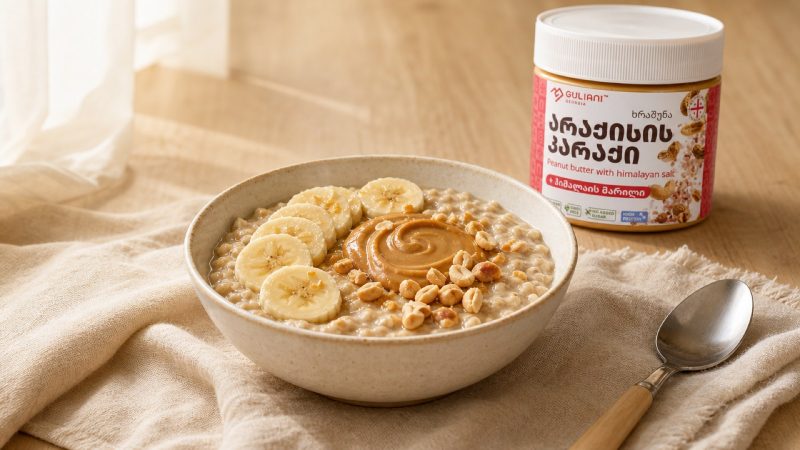
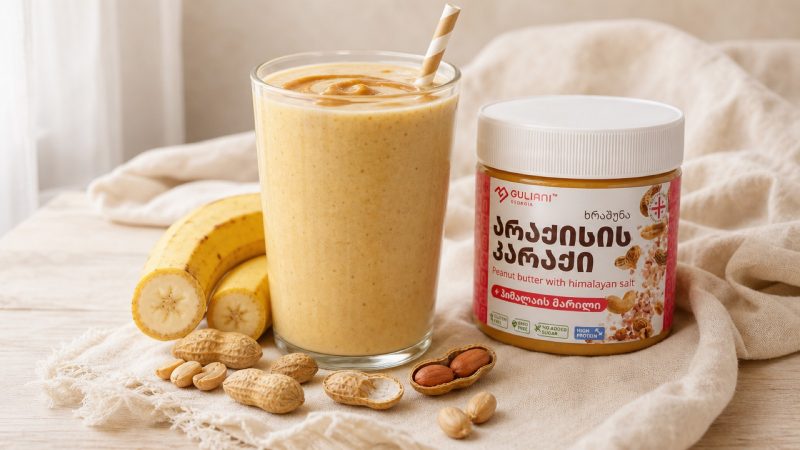
- Banana. Put a thin layer of butter on bread and top it with banana slices, or mash banana and butter together with a fork. Soft, moist banana “unlocks” the density at once.
- Jam or preserves. Grandma’s cherry or fig preserves over a thin layer of butter make a classic and very Georgian combination.
- A drink on the side. Tea or milk. Simple, but it works.
A quick warm-water sauce
- Put 2 tablespoons of peanut butter in a bowl.
- Add warm water a spoonful at a time, stirring well after each, until it reaches the consistency of thick cream.
- Season it: crushed garlic, lemon juice or wine vinegar, a pinch of utskho suneli, red pepper and chopped coriander.
- Serve with boiled chicken, fried eggplant, or a cucumber and tomato salad. It’s a little reminiscent of Georgian walnut sauces, but ready in five minutes.
Water goes in only on the plate, right before eating, and never into the jar. Always use a clean, dry spoon for the jar.
Separation, thickening and storage: when everything is fine
Oil on top is normal. Natural butter has nothing to hold the oil in the mass, so over time it rises. Push a knife or spoon to the bottom of the jar and stir well.
A firm layer at the bottom is the other side of the same story. If you don’t stir, the top gets oilier and the bottom drier and stickier. Stir thoroughly when you first open the jar, and give it a quick stir each time after.
When to be careful: if the smell turns bitter or sharp, the taste changes, or you notice mould or unusual moisture on the surface, don’t eat it. Store it as the label says and keep the lid tightly closed.
In short
If it sticks to your palate, that’s a sign the jar holds real, well-roasted peanuts and not water or palm oil. Start with Classic alongside apple or banana, and try the honey one stirred into matsoni. For more ideas, browse our recipes. If you want to know how many calories your portion has, use the nutrition calculator.