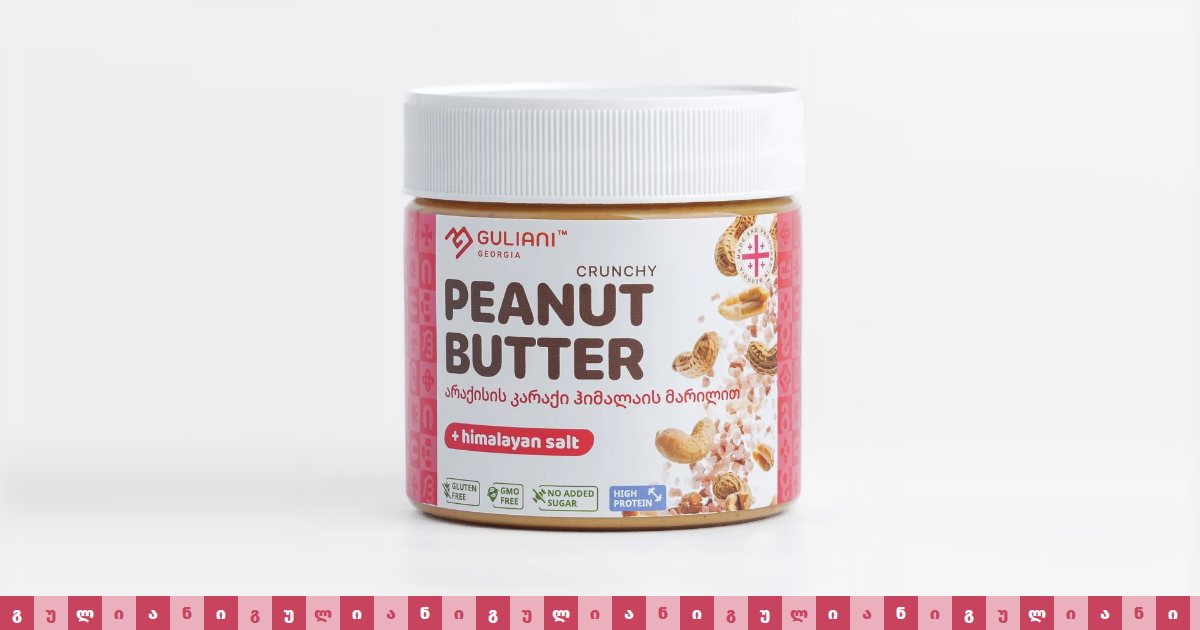
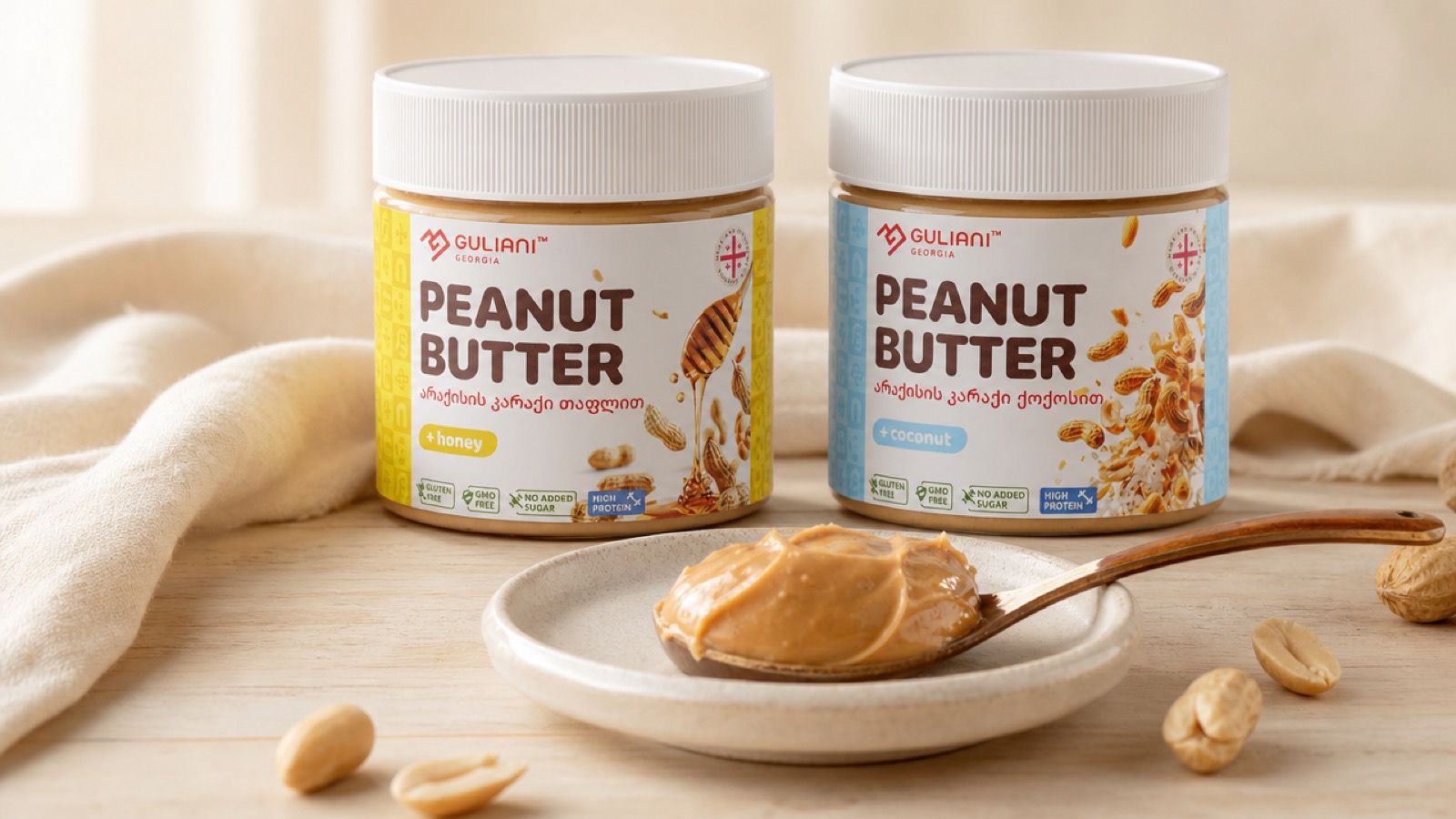
Short answer: a level tablespoon (about 15 g) of natural peanut butter has roughly 97 kcal, and a teaspoon about 32 kcal. But a "spoonful" can vary a lot — here's why.
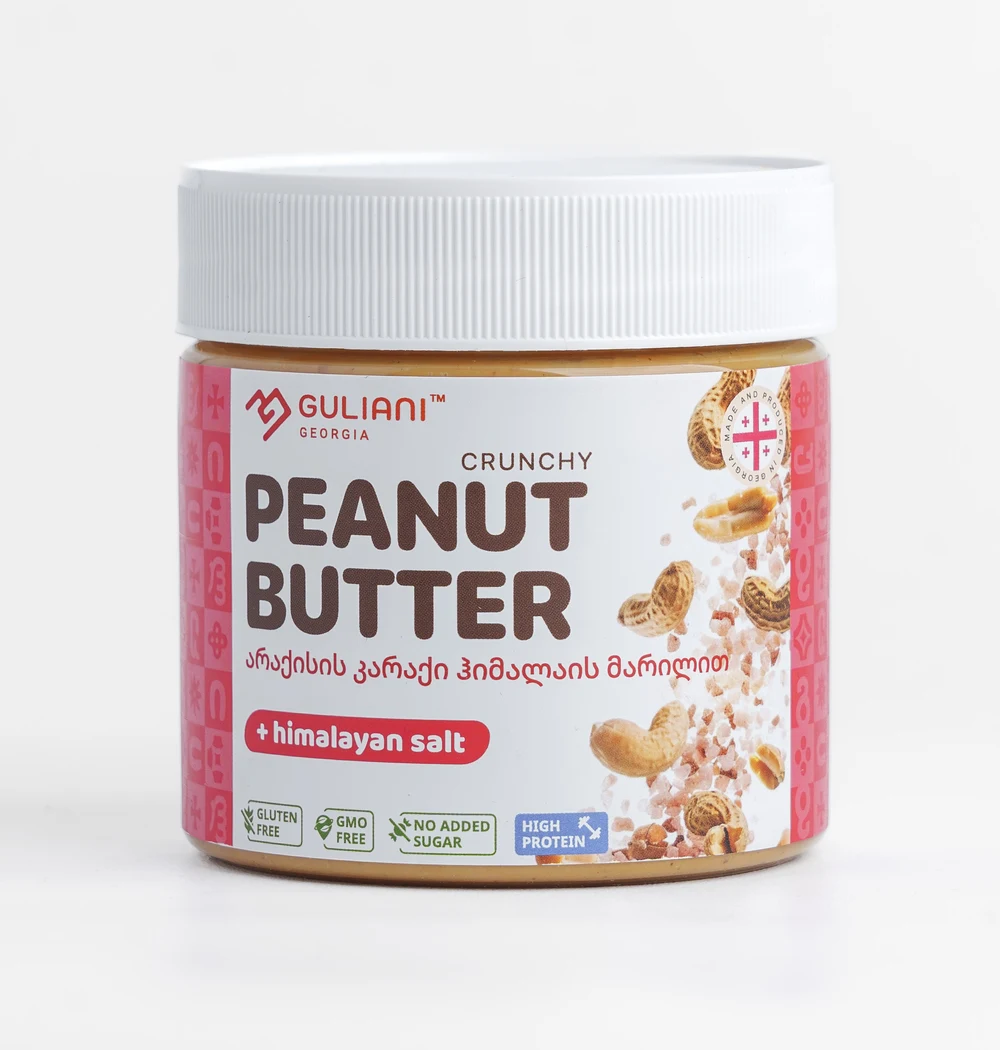
Calories in every GULIANI butter
The table is based on the per-100 g figures printed on each jar. Spoon weights are approximate and assume a level spoon, not a heaped one.
| Nut butter | 1 tsp (5 g) | 1 tbsp (15 g) | 100 g |
|---|---|---|---|
| Peanut Butter Classic | 32 kcal | 97 kcal | 645 kcal |
| Peanut Butter with Honey | 30 kcal | 90 kcal | 601 kcal |
| Peanut Butter with Coconut | 30 kcal | 91 kcal | 606 kcal |
| Almond Butter | 33 kcal | 98 kcal | 655 kcal |
| Cashew Butter with Coconut | 33 kcal | 98 kcal | 652 kcal |
Why is nut butter so calorie-dense?
Roughly half of a nut butter is fat, and every gram of fat carries 9 kcal — more than twice as much as protein or carbohydrates. Most of that fat is the unsaturated kind found naturally in nuts, so the calories aren't "empty": they come with protein and fiber.
The "spoonful" trap
A heaped tablespoon easily weighs 25–30 g — that's 161–194 kcal, nearly double what most people assume. If you're counting calories:
- weigh your usual portion on a kitchen scale once — you'll see what you actually take;
- use a level spoon, not a heaped one;
- spread thinly — nut butter goes further than you think.
How much per day?
The most common serving is 1–2 tablespoons (15–30 g). 30 g of Classic gives about 194 kcal and 8 g of protein — a solid part of a snack, especially with fruit or whole-grain bread.
Work out the calories in your own portion →
This article is for general information and does not replace advice from a doctor or dietitian.