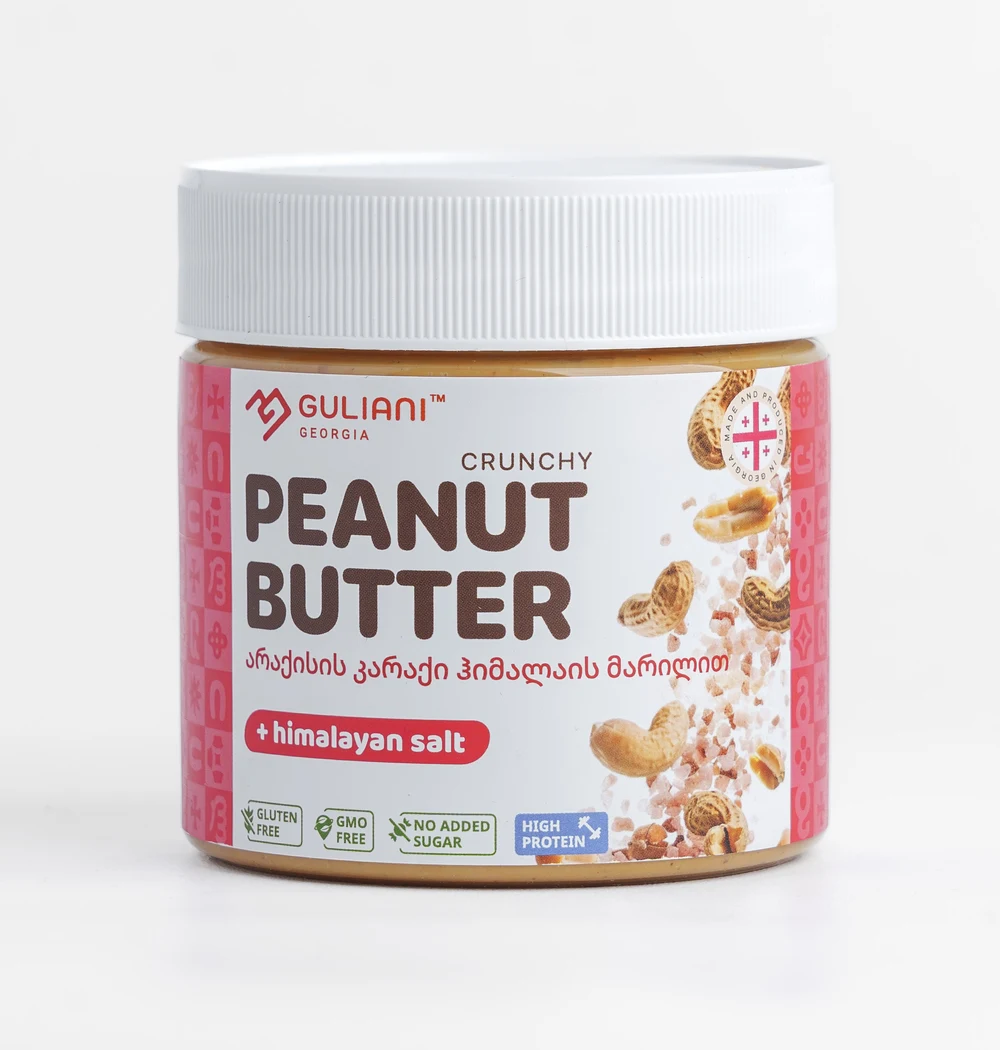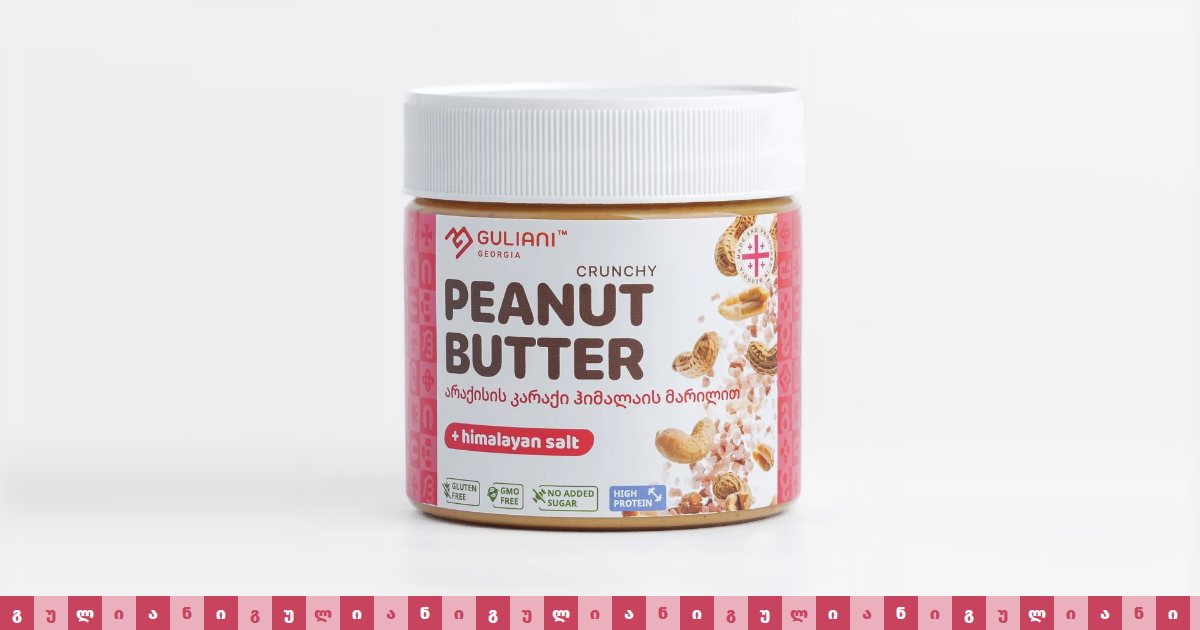
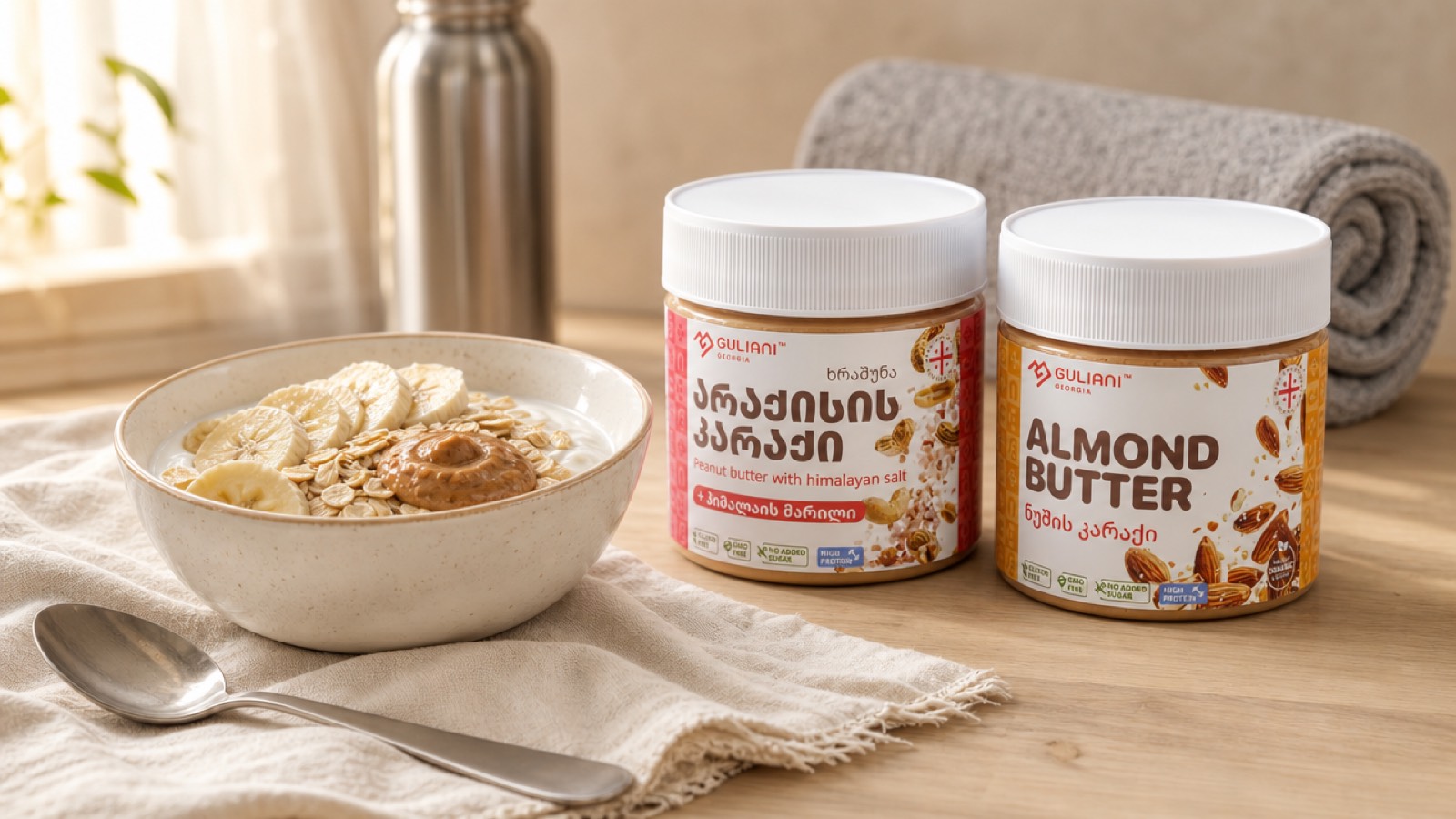
Short answer: GULIANI Classic has 26.8 g of protein per 100 g — one of the highest figures among plant foods. Two tablespoons give you about 8 g.
Protein in all five butters
| Nut butter | Protein per 100 g | Protein in 2 tbsp (30 g) | Protein per 100 kcal |
|---|---|---|---|
| Peanut Butter Classic | 26.8 g | 8 g | 4.2 g |
| Peanut Butter with Honey | 23.3 g | 7 g | 3.9 g |
| Peanut Butter with Coconut | 22 g | 6.6 g | 3.6 g |
| Almond Butter | 21 g | 6.3 g | 3.2 g |
| Cashew Butter with Coconut | 17 g | 5.1 g | 2.6 g |
The last column matters most for athletes: it shows how much protein you get for every 100 kcal. Peanut butter leads here, but because of its fat it's still a "protein + energy" food rather than a lean protein source like cottage cheese, eggs or chicken.
Incomplete protein — what to do about it
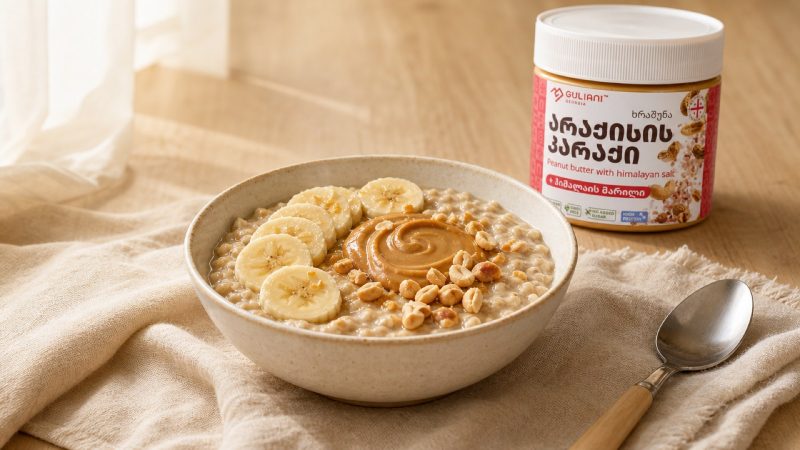
Peanut protein is relatively low in the amino acid methionine, while grains are low in lysine. The good news: they complement each other, so peanut butter on whole-grain bread or stirred into oatmeal gives you a more complete protein. Pairing it with dairy (yogurt, milk) works well too.
How to use it around training
- 1–2 hours before: toast or a banana with a spoon of peanut butter — energy without feeling heavy;
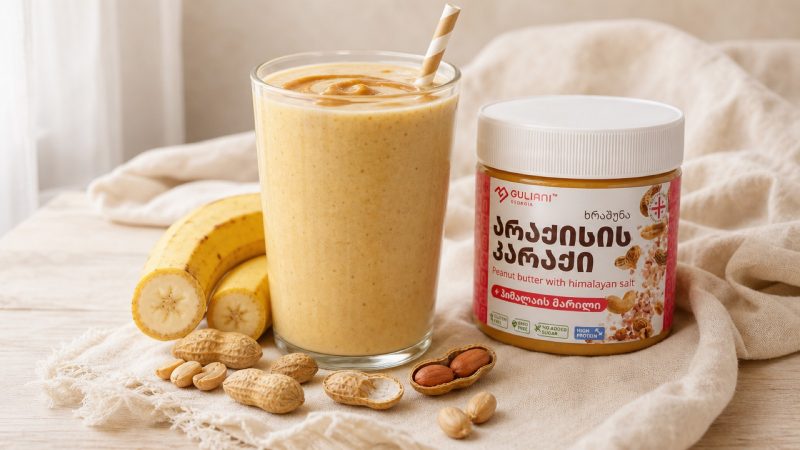
- after training: a banana, milk and peanut butter smoothie or peanut butter oatmeal;
- when bulking: nut butter is an easy way to add calories without a lot of volume.
Avoid a large portion right before a workout — fat slows digestion.
How much butter does your protein goal need? — calculator →
This article is for general information and does not replace advice from a doctor or dietitian.