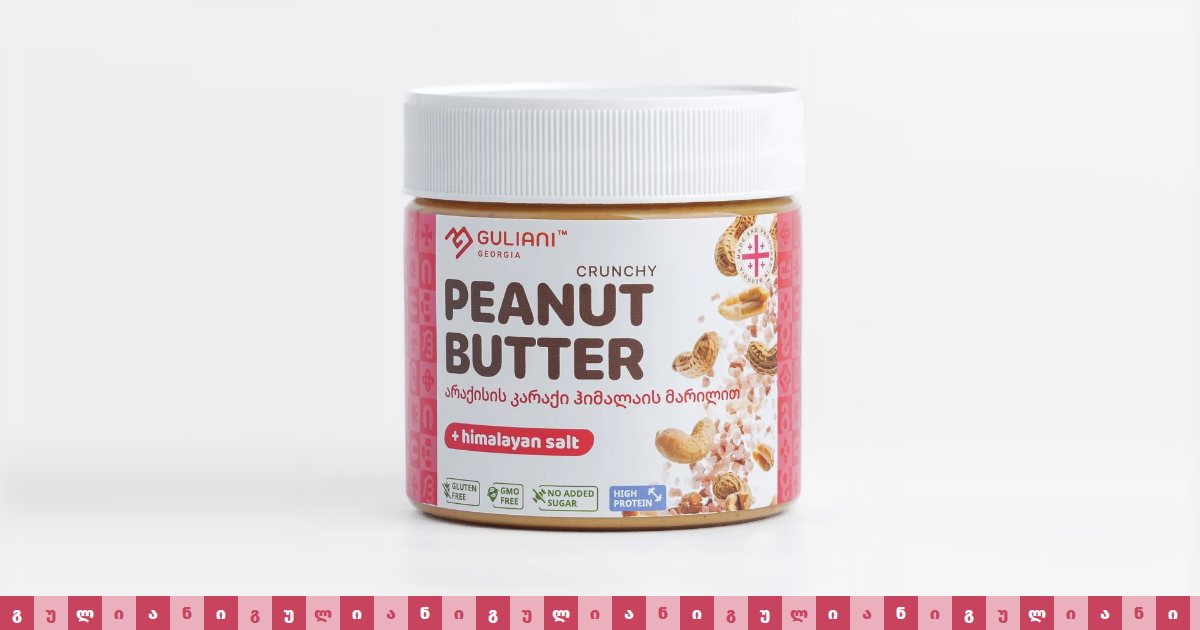
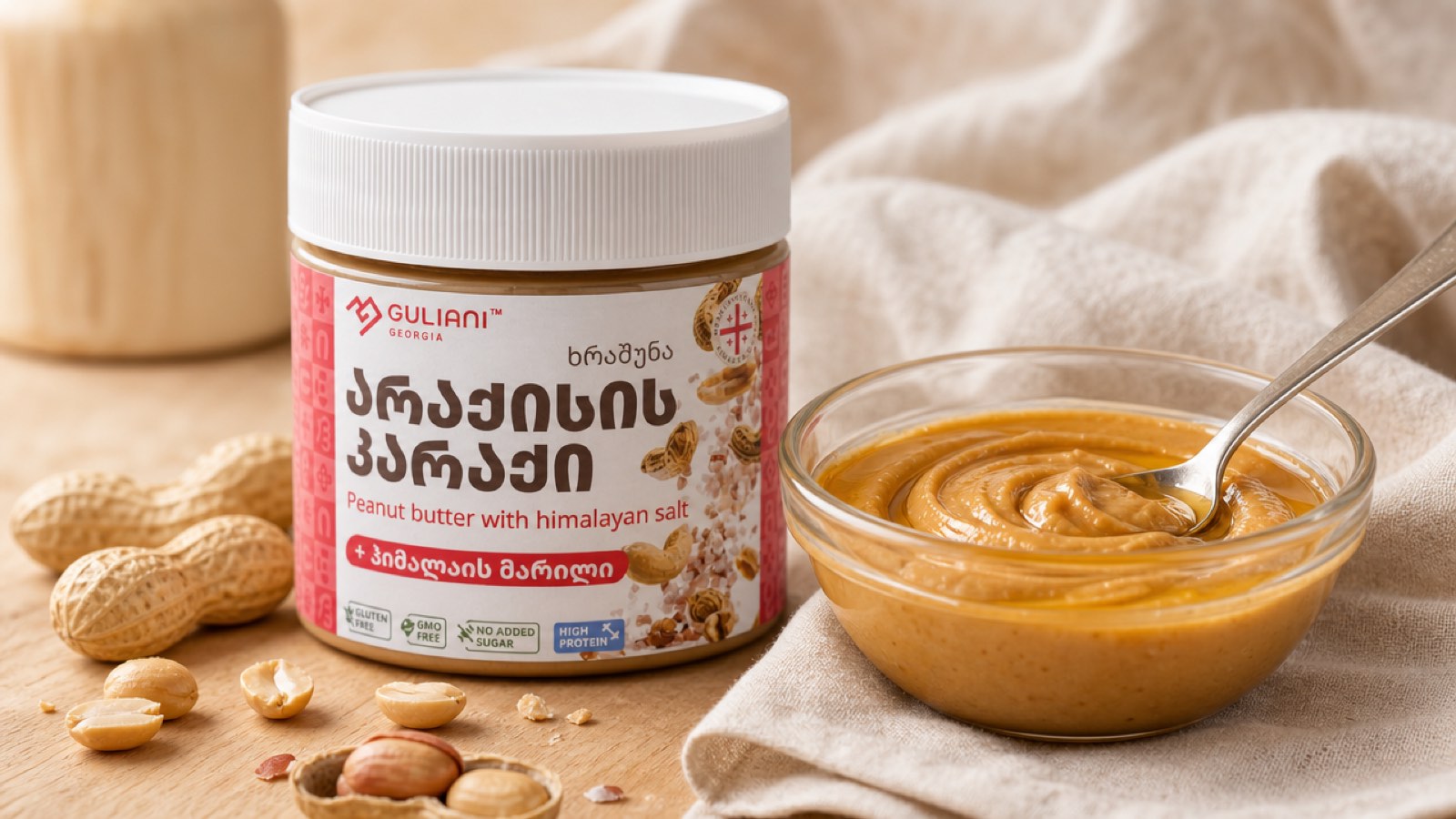
Short answer: a layer of oil on top of the jar is normal for natural nut butter. It is the nuts' own fat rising to the surface — not spoilage and not added oil. Stir it back in; don't pour it off.
Why nut butter separates
Nuts are roughly half fat. Peanut Butter Classic, for example, contains 52.4 g of fat per 100 g — all of it from the peanuts themselves. Grinding releases that fat from the nut cells as a liquid oil, and the ground solids (protein, fiber, carbohydrates) are held in it.
The solids are heavier than the oil. While the jar stands still for days and weeks, gravity slowly pulls them down and the oil collects on top. Nothing holds the two parts together — and that is the point: a butter made only from nuts and salt has no emulsifier to do it.
What makes it separate faster
| Factor | What happens |
|---|---|
| Warmth | Warm oil is thinner and rises faster — a jar near the stove or in the sun separates within days. |
| Time standing still | The longer the jar stands untouched, the thicker the oil layer. |
| Crunchy vs. smooth | Pieces of nut settle faster than a fine paste. |
| Type of nut | Oilier nuts release more oil; the amount differs from nut to nut. |
Is separated nut butter spoiled?
No. Separation on its own says nothing about freshness. Spoiled nut butter shows different signs:
- a bitter, sour or paint-like smell or taste — the fats have oxidized;
- mold or unusual spots on the surface;
- the date on the jar has passed.
How to keep an opened jar fresh for longer: does natural nut butter need to be refrigerated?
How to stir it back to smooth
- Before opening, turn the closed jar upside down for a few hours — the oil moves back through the paste and stirring gets easier.
- Use a long, firm utensil — a table knife or a spoon handle — and reach all the way to the bottom, where the dense part sits.
- Stir for about a minute, lifting the paste up from the bottom instead of circling on top.
- If the bottom is hard, stand the closed jar in warm (not hot) water for 10 minutes: the paste softens and mixes easily.
- After stirring, keep the jar in the fridge. Cold oil barely moves, so the butter stays mixed. Take it out 10–15 minutes before spreading.
Don't pour the oil off. It is part of the product: without it the rest of the jar turns dry and crumbly, and the fat and calorie values on the label no longer match what you eat.
Why some nut butters never separate
"No-stir" butters stay uniform because something holds the oil in place. Usually it is one of these — and it is always on the ingredient list:
- fully or partially hydrogenated vegetable oils;
- palm oil;
- emulsifiers such as mono- and diglycerides of fatty acids.
These ingredients are not dangerous in themselves, but they change the recipe: the product is no longer just nuts. If you want a butter made only from nuts, a little oil on top is the trade-off.
What's in GULIANI jars
None of our butters contain palm oil or stabilizers, so some separation is expected:
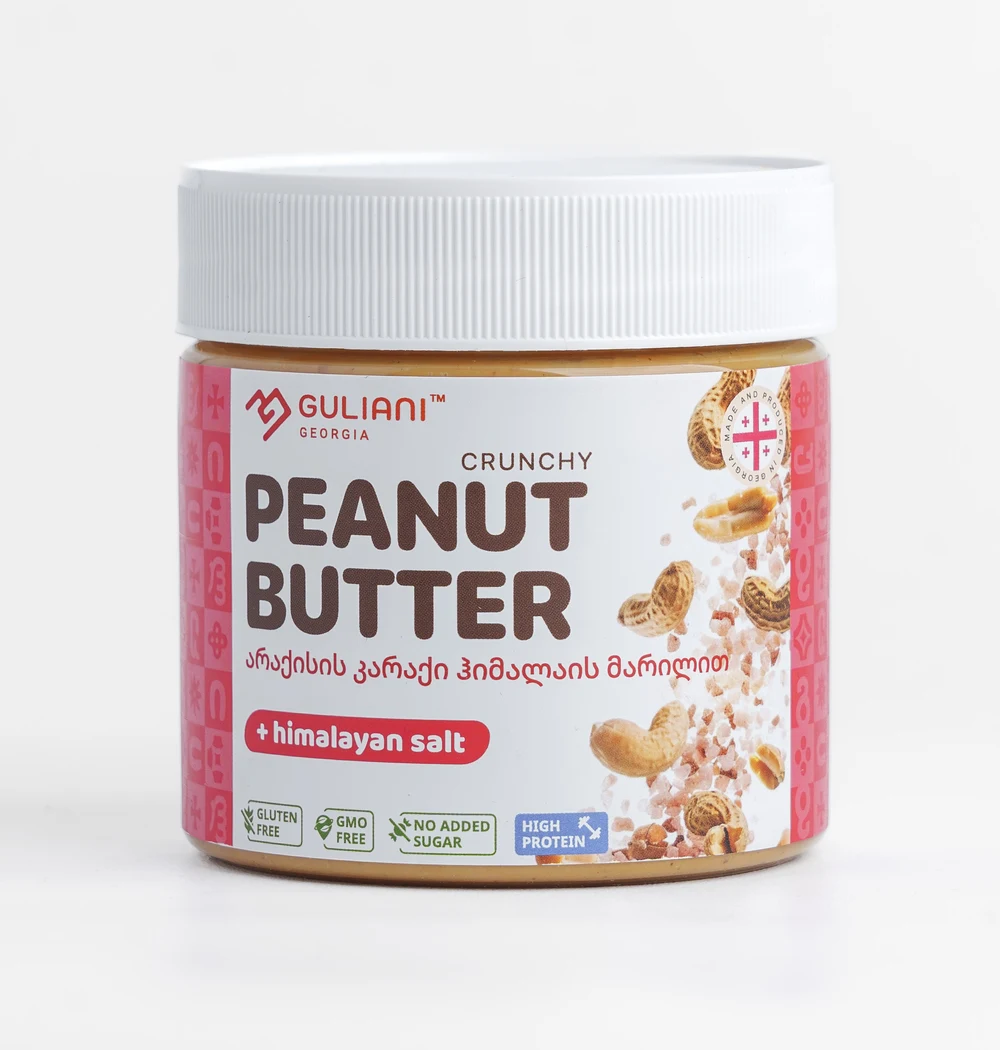
- Peanut Butter Classic — Roasted peanuts, Himalayan salt
- Peanut Butter with Honey — Roasted peanuts, honey, Himalayan salt
- Peanut Butter with Coconut — Roasted peanuts, coconut flakes, honey, Himalayan salt
- Almond Butter — Roasted almonds (organic), Himalayan salt
- Cashew Butter with Coconut — Roasted cashews, coconut flakes
Quick answers
Should I pour off the oil? No — stir it back in. Pouring it off leaves the rest of the jar dry.
Does separation mean the butter was made badly? No. It means there is nothing in it whose only job is to stop separation.
Can I store the jar upside down? Yes, with the lid tightly closed — it spreads the oil back through the paste.
Why does it separate more in summer? Warm oil is thinner and rises faster. After stirring, keep the jar in the fridge.