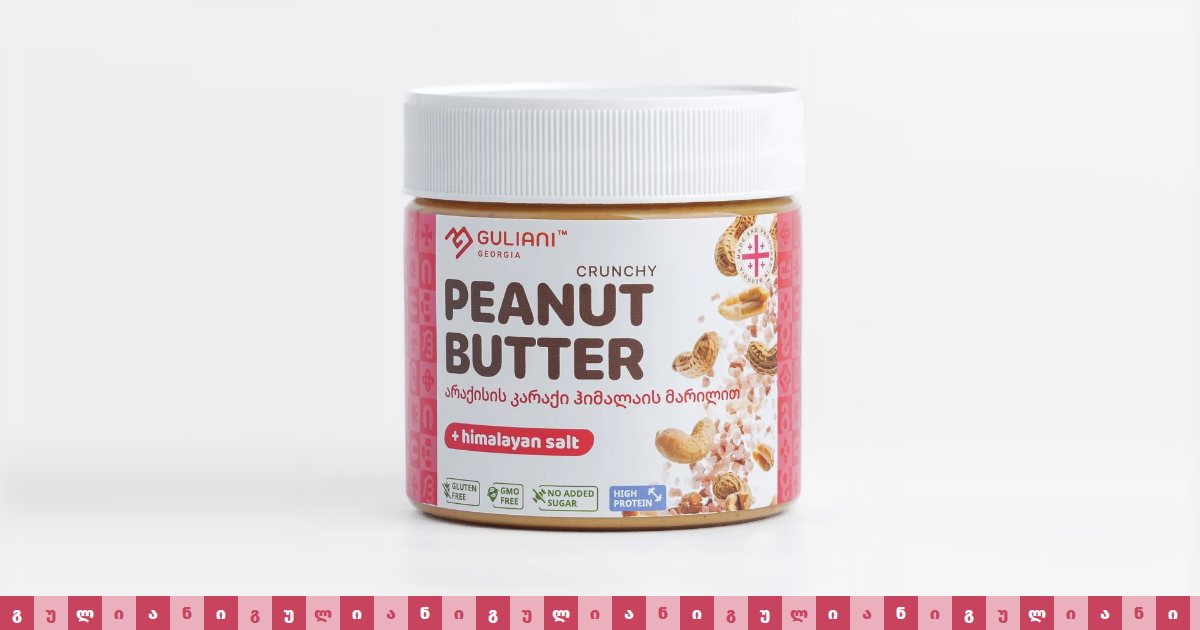
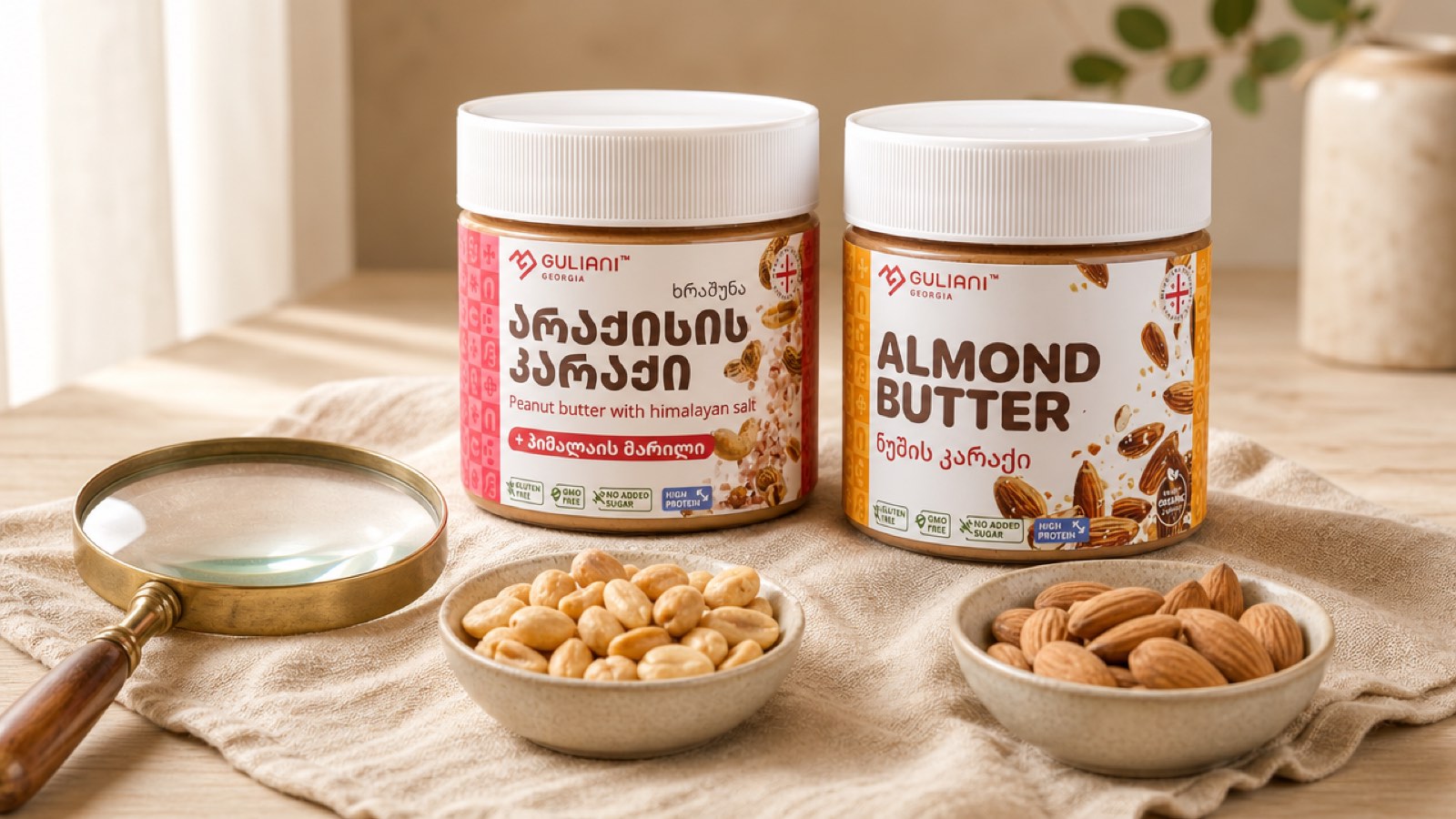
Short answer: turn the jar around and read the ingredient list first. A good nut butter is mostly nuts, perhaps with salt, honey or coconut. Check for added sugar and for added oils such as palm oil or hydrogenated fats, compare the nutrition table per 100 g — and don't worry about a layer of oil on top: in natural nut butter it is normal.
1. Read the ingredient list
Ingredients are listed in descending order by weight, so the nut should come first. A short list is not automatically better, but it is easy to understand: you know exactly what you are buying. If the nuts appear only in the middle of a long list, the jar holds a spread with nuts rather than a nut butter.
2. Added sugar vs sugars on the label
The nutrition table always shows a "sugars" row, because nuts contain some sugar naturally. Peanut Butter Classic has 4.2 g of sugars per 100 g with no sugar added at all. Whether sugar was added you can see only in the ingredient list: sugar, glucose syrup, dextrose, fructose, other syrups. Honey is natural, but it still adds sugars — the honey version has 12.8 g per 100 g. "With honey" and "no sugar" are not the same thing.
3. Palm oil and other added fats
Some butters contain palm oil, hydrogenated fats or other oils to keep the texture uniform and stop separation. These are not dangerous in themselves, but the product is no longer just nuts. If that matters to you, the ingredient list is the only reliable check. None of the GULIANI butters contain palm oil, so a little oil on top is expected — see why natural nut butter separates.
4. Salt
A little salt brings out the nut flavor. Look at the "salt" row per 100 g: Classic has 0.3 g, which is about 0.11 g in a 36 g daily portion. If you are watching your salt intake, compare this row between jars.
5. Compare the nutrition table per 100 g
Calories are similar across nut butters — 601–655 kcal per 100 g in the GULIANI range — because all of them are mostly fat. The real differences are protein, sugars and saturated fat. All five flavors side by side: the comparison page.
6. Price per 100 g, not per jar
Jar sizes differ, so compare the price per 100 g. Example: a 350 g jar of Classic costs 15 GEL, which is 4.3 GEL per 100 g.
7. Producer and origin
The label should name the producer and the country of manufacture. GULIANI butters are made in Tskaltubo, Georgia; the almond butter is made from Georgian organic almonds. Clear information about who made the product and from what helps you compare honestly.
Checklist for the store
| What to check | Good sign | Look closer |
|---|---|---|
| Ingredient list | Nuts first; a short, clear list | Long list, nuts far down |
| Sugar | No sugar or syrups among the ingredients | Sugar, glucose syrup, dextrose, other syrups |
| Added fats | No added oils | Palm oil, hydrogenated fats |
| Salt | A little salt, or none | A high figure in the "salt" row |
| Texture | A layer of oil on top that stirs back in | Never separates — check the list for stabilizers |
| Smell after opening | Fresh, roasted nuts | Bitter, sour or paint-like |
After you buy
Stir the jar well before first use, keep the lid closed and use a clean, dry spoon. Where to keep an opened jar: does natural nut butter need to be refrigerated?
What's in GULIANI jars
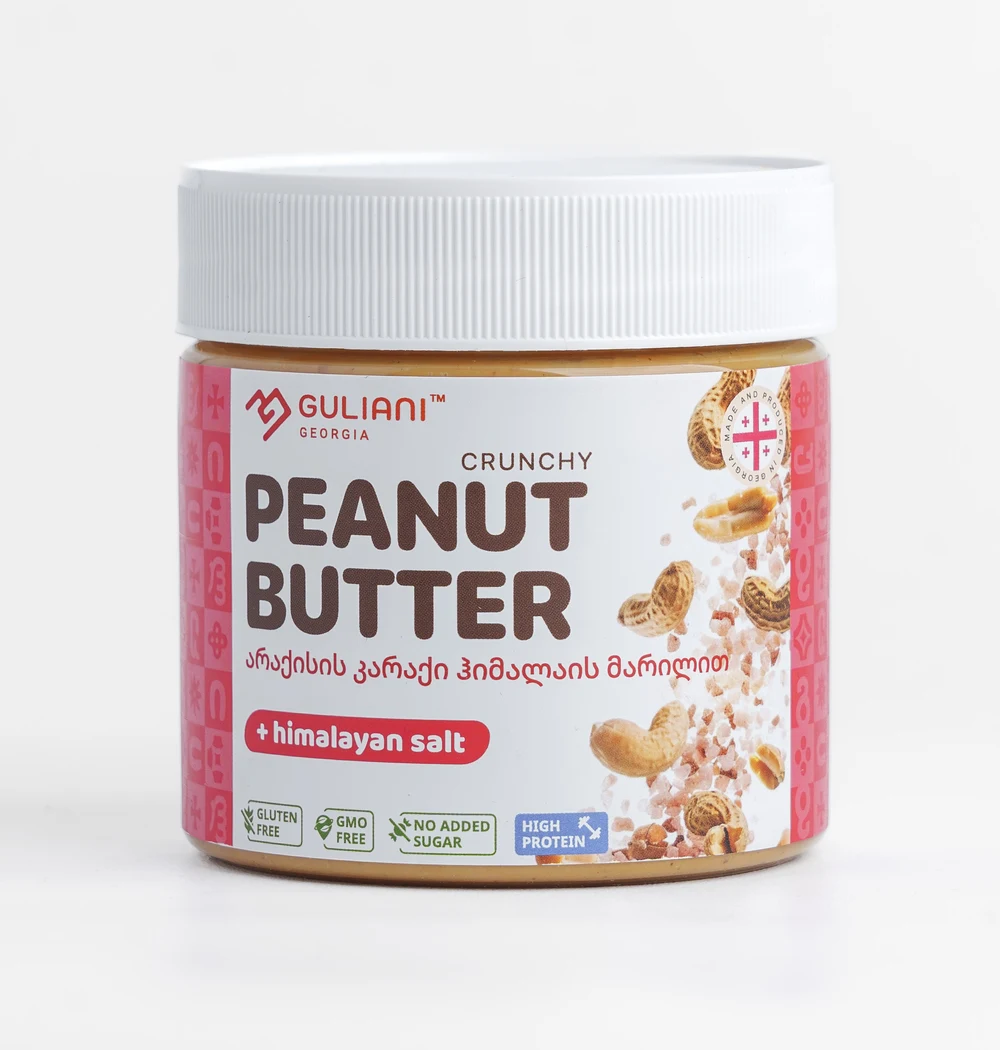
- Peanut Butter Classic — Roasted peanuts, Himalayan salt
- Peanut Butter with Honey — Roasted peanuts, honey, Himalayan salt
- Peanut Butter with Coconut — Roasted peanuts, coconut flakes, honey, Himalayan salt
- Almond Butter — Roasted almonds (organic), Himalayan salt
- Cashew Butter with Coconut — Roasted cashews, coconut flakes
Quick answers
Are fewer ingredients always better? Not automatically, but a short list is easier to check against what you want to eat.
Is oil on top a sign of poor quality? No — it is the nuts' own oil and is normal in butter without stabilizers.
Does "natural" on the front mean no additives? The front of the jar is marketing; the ingredient list on the back is what counts.